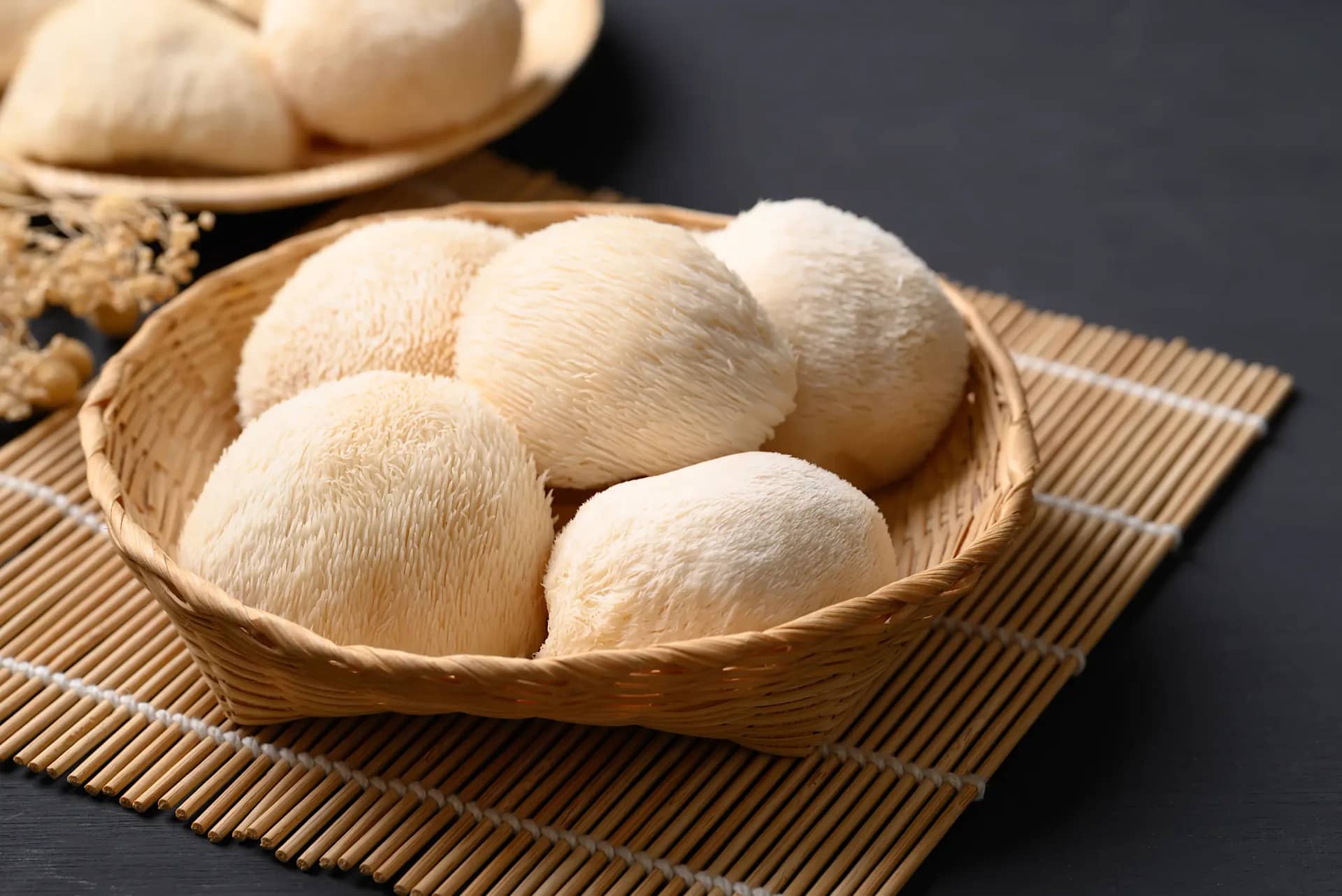
Hericium erinaceus
Lion's Mane Mushroom
Lion’s Mane Mushroom
Overview
What is Lion's Mane Mushroom?
Lion's Mane Mushroom (Hericium erinaceus) is a natural extract from the fruiting body, standardized to ≥30% polysaccharides using UV spectrophotometry. It contains hericenones and erinacines, bioactive compounds that have been studied for their role in supporting Nerve Growth Factor (NGF) synthesis, a protein essential for the growth and maintenance of neurons.
In the FlowVeda® formula, Lion's Mane supports the neural environment where cognitive adaptation happens. It is not a stimulant. It supports the biological conditions your brain uses to form new connections, maintain existing ones, and adapt to the demands of focused, intentional living.
Lion's Mane has been used in traditional East Asian medicine for centuries and is now supported by a growing body of published clinical and preclinical research. Review the clinical research behind Lion's Mane Mushroom.
Plant Part Used
Fruiting Body: The fruiting body of Hericium erinaceus is the source of hericenones and erinacines, the bioactive compounds studied for their role in supporting Nerve Growth Factor synthesis. FlowVeda® uses a fruiting body extract standardized to ≥30% polysaccharides, ensuring consistent bioactive potency.
Flow State Pillars
- Focus
- Creativity
- Purpose
- Lion’s Mane Mushroom
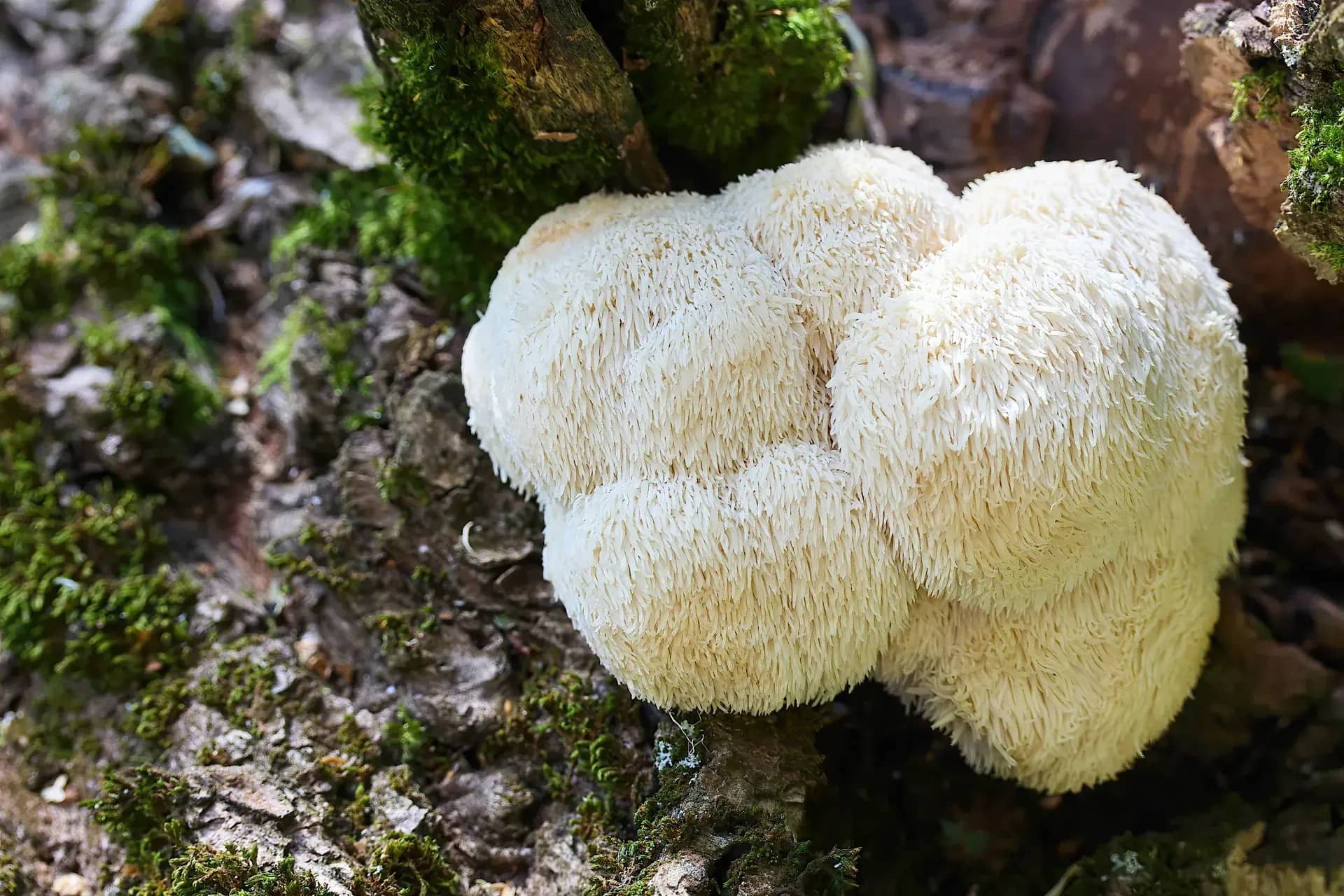
Lion's Mane Mushroom
The Origins
History
Lion's Mane Mushroom has been used in traditional East Asian medicine for centuries. In ancient China, it was reserved for royalty and considered a tonic for the mind and body. Buddhist monks consumed it to support focus and clarity during extended meditation practice, believing it strengthened their ability to maintain sustained awareness.
In traditional Chinese medicine, Lion's Mane is classified as a tonic for the five internal organs: the heart, liver, spleen, lungs, and kidneys. Practitioners prescribed it for digestive health and mental vitality, observing that those who consumed it regularly maintained sharper thinking as they aged.
The mushroom grows wild on hardwood trees across North America, Europe, and Asia, but the East Asian tradition of cultivating and consuming it for cognitive purposes is where its modern reputation originates. Today, research into hericenones and erinacines is confirming what centuries of traditional practitioners observed: this mushroom supports the conditions for a clear and adaptive mind.
FlowVeda® honors that lineage by sourcing Lion's Mane from sustainable farms in East Asia, standardized to ≥30% polysaccharides to ensure consistent bioactive potency.
Source Origin
East Asia: Sourced from sustainable farms in East Asia, Lion's Mane Mushroom retains its natural potency, delivering hericenones and erinacines that support cognitive function and nerve health.
Full Transparency
FlowSource Verified
- Supplier: Jiaherb
- Origin: Shaanxi, China
- COA Date: March 2023
- Batch: 0455G5
- Test Method: BOVMTDPC (FDA-recognized verification under 21 CFR 111.75(d)(1))
- Result: 1,000 mg per 4 capsules
- Certifications: Kosher
Lion’s Mane fruiting body extract is sourced from Jiaherb and verified at the supplier and confirmed by Vitaquest International quality control before encapsulation. View the full FlowSource™ ingredient journey.
Track Your Lion's Mane Mushroom on FlowSource →Science
The Science Behind Your Flow State Foundation
Lion's Mane Mushroom contains hericenones and erinacines, bioactive compounds studied for their role in supporting Nerve Growth Factor synthesis. Published research examines effects on cognitive function, mood, and neuroprotection.
Read the ResearchQuality
Our Quality Standard
Every ingredient in FlowVeda® undergoes rigorous third-party testing for purity, potency, and safety, meeting or exceeding industry standards for quality. Each batch is verified free from contaminants, and accurately labeled.
Dosage
Ideal Use and Dosage
Take FlowVeda® each morning with your preferred beverage. Your daily Lion's Mane Mushroom intake is:
Essential
500 mg
2 capsules
Edge
750 mg
3 capsules
Prime
1,000 mg
4 capsules
Published clinical trials have studied Lion's Mane mushroom extract at dosages within this range. Do not exceed four (4) capsules in any 24-hour period. Consistent daily use supports Lion's Mane Mushroom's contribution to the FlowVeda® formula over time.
These statements have not been evaluated by the Food and Drug Administration. This product is not intended to diagnose, treat, cure, or prevent any disease.
Get Started
Take FlowVeda consistently for 60 days. Feel the difference or your money back.
Free your mind. Live in flow.